
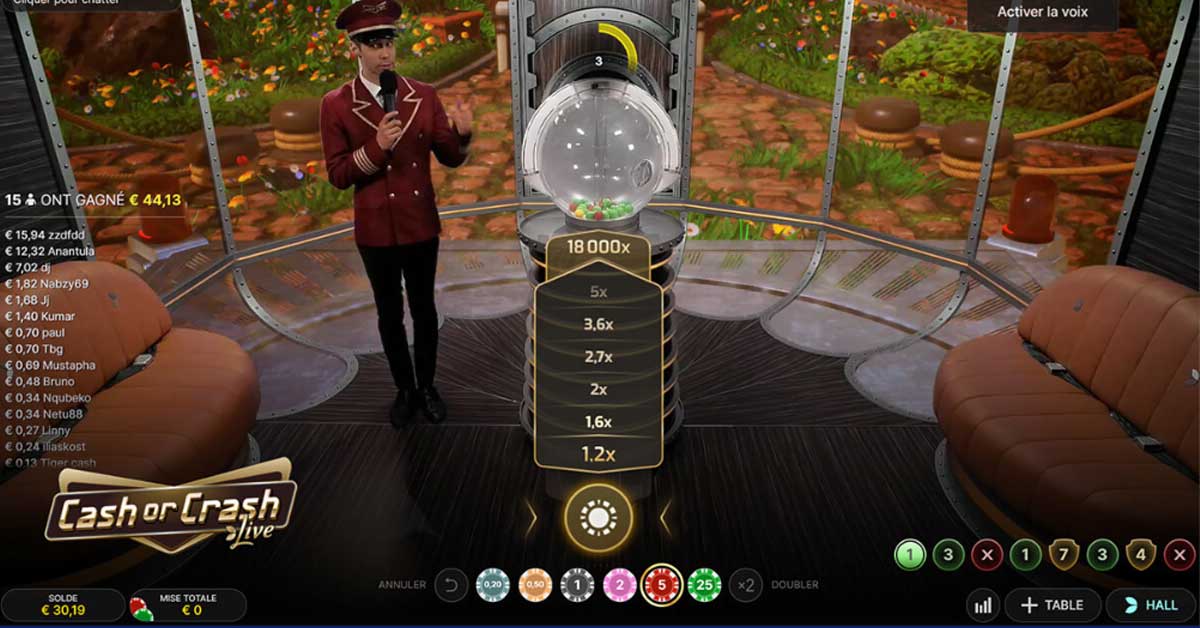
When we look at the inner workings of live game shows like Cash or Crash Live, we encounter components created to offer players a semblance of control within a volatile context https://cashorcrashlive.net/. The Block feature shines as one of the most significant tactical tools offered to UK players. Different from the central game of chance, where a random multiplier can crash at any point, the Block enables a participant to preemptively ‘lock in’ a part of their potential winnings before the certain crash takes place. It changes a purely spectator session into a more involved, choice-driven version. We view its use as a critical risk-control strategy, separating recreational play from more thoughtful ways. For the UK market, where playing is often perceived through a perspective of both enjoyment and clever participation, becoming proficient in this function is key to dealing with the game’s inherent conflict between greed and security.
Precisely what the Block Function Actually Means
Essentially, the Block function in Cash or Crash Live is a straightforward yet potent security measure. Throughout a round, as the multiplier increases, a player can click the Block button to lock in a part of their prospective winnings. This step sets a guaranteed floor for that round’s winnings. If the round crashes at a value below the point they set their block, they still receive the secured sum. If the game soars past the block point, their potential earnings keep increasing, but the blocked sum is safe. It’s important to realize that activating the Block does not terminate your involvement in the current round; your “live” multiplier continues to ride, but you have a safety net. We view this dual-mode experience—having safety while remaining active—to constitute the feature’s mental appeal. For British players, it tackles the timeless issue of figuring out when to secure winnings, a notion recognized from everything from the stock market to a tense round of a pub quiz.
Strategic Pacing for UK Users
Tactical application of the Block is all about timing, and UK users commonly create strategies derived from seen game trends and individual tolerance for risk. No one can say no widely ideal moment, which is why it is a highly debated issue. Some suggest an initial block, perhaps at a conservative 1.5x or 2x multiplier, to ensure a tiny but consistent profit, growing a funds steadily and soundly. Others, pursuing larger profits, will permit the multiplier go far higher before deploying their block. Our research shows the fact that many veteran players in the UK employ a combined strategy, changing their block point based on the pattern of previous rounds. For example, upon a number of successive low multiplier failures, some could deploy earlier, anticipating a tendency. Conversely, after a massive multiplier, the subsequent session could witness participants blocking at higher multipliers, anticipating it happening again. The key is that the decision is active and contextual, shifting the player from a mere spectator to an active participant, handling their own exposure.
Frequent Blocking Mistakes you Should Avoid
Through our analysis of gameplay, we’ve recognized several common pitfalls UK players should be aware of when using the Block. The most prevalent mistake is blocking out of panic at the first indication of a rising multiplier, often at a level so low it barely covers the initial stake. This undermines the function’s goal of securing meaningful profit. Conversely, greed results in the error of never blocking at all, treating every round as an all-or-nothing gamble, which statistically erases gains over time. Another nuanced error is positioning the block at a specific, psychologically significant number like 5.0x, which many other players are also prone to use. If a crash is crafted to frequently occur just below such widespread thresholds, this strategy can backfire. We advise players to adjust their block points and ground them on a pre-defined strategy rather than emotional impulses during the heat of the round.
Distinguishing Block to Auto-Cash-Out
It’s vital to separate the Block function from the separate Auto-Cash-Out feature, as UK players sometimes conflate the two. Auto-Cash-Out is a set-and-forget tool where you preselect a multiplier at which your entire bet is instantly cashed out, ending your engagement in that round fully. The Block function is more refined. It does not end your round; it just secures a portion of your winnings while your live bet carries on to ride. This implies you can still profit from a climbing multiplier after blocking, which is unattainable with Auto-Cash-Out. We regard Auto-Cash-Out as a tool for control, applying a strict profit target. The Block, though, is a tool for risk management and opportunity maximisation. A sophisticated UK player might use both in combination—for illustration, establishing a moderate Auto-Cash-Out at 10x but using a manual Block at 4x to secure a minimum profit well before that target.
Emotional Influence on Gameplay
The addition of the Block function dramatically changes the psychological dynamic of Cash or Crash Live. Without it, the game is a true test of courage, a all-or-nothing “cash out or bust” situation that frequently results in regret—either from cashing out too early or losing everything. The Block resolves this by offering a third, comforting option. This feature alleviates the anxiety of losing everything, which in turn can result in more composed and possibly more lucrative choices. We observe that UK players utilizing the Block frequently describe feeling more empowered, which increases their fun and commitment with the game. Nevertheless, it also introduces new forms of emotional strain, for example the vexation of blocking at 3x only to see the multiplier climb to 10x. This “fear of missing out” (FOMO) is a powerful force, and learning to manage the emotional response to a well-timed or mistimed block is as important as mastering the timing itself.
In what manner UK Rules Affect Feature Application
The application of functions like the Block is not an isolated event; it is shaped by the UK’s stringent gambling rules and responsible gaming framework. The UK Gambling Commission mandates that games provide clear information and instruments that promote player control. The Block function fits perfectly with this ethos, as it is a tangible tool for risk management and limiting losses. Additionally, the availability of detailed game stats and history, which UK-licensed sites have to provide, directly informs Block strategy. Players can analyze previous rounds to inform their timing, adding a layer of analytical play. We also note that the UK market’s emphasis on transparency means the functioning of the Block are clearly explained, avoiding confusion. This framework of regulations encourages a more deliberate, analytical approach to the gameplay, where the Block is seen more than a button, it is a core part of strategic playing.
Building a Custom Block Approach
Creating a consistent individual strategy for the Block is the hallmark of a considerate Cash or Crash Live player in the UK. We advise starting with a bankroll handling plan: decide what portion of your session stake you are prepared to risk per round and what constitutes a achievable profit target. Your Block plan should fulfill these targets. One technique is the “tiered block,” where you block a modest percentage of your potential winnings at a low multiplier, another portion at a middle multiplier, and let the balance ride. Another is the “fixed profit” strategy, where you calculate the specific multiplier needed to secure a specific profit and cash out there always, disregarding the appeal of higher multipliers. Crucially, any plan must be written down and adhered to before you start playing, as in-play emotions will obscure judgement. The Block is a powerful tool, but its potential is only realized through controlled, deliberate use.